


“Leadership And Entrepreneurship Programme” (LEAP)
Introduction
The ACADEMY For A Young Africa Is A Christian, Non-Profit Training Service Provider. It offers a 1-year “Leadership And Entrepreneurship Programme” (LEAP) – Level 1. This May Be Followed By A Level 2 LEAP Course.
COURSE OBJECTIVE: Completing the Leadership And Entrepreneurship Programme (LEAP) Course – Level 1 will help you to develop your skills to prepare yourself for a job, further studies or training or to start an own business.
PREREQUISITES: The LEAP Course is a “transversal” skills development programme. This means that the skills learnt through completing the LEAP Course may be applied in any field or industry. The Course has been designed so that it is suitable for any unemployed youth. The content is suitable for adults as well, but for such adults the ACADEMY For A Young Africa offers similar training courses, which are aimed at women entrepreneurs and existing business owners, who wish to improve their leadership and entrepreneurship skills.
How The LEAP Course Works
The LEAP Course – Level 1 consists of two Modules:
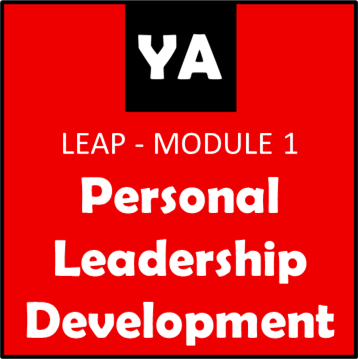
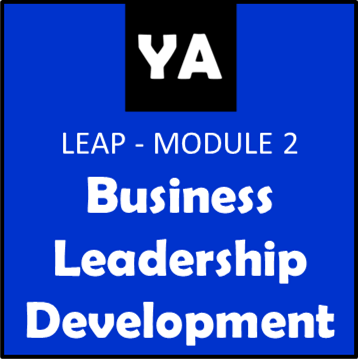
Each Module runs over six months, including student holidays. This is a Full-Time Course. You Will Need To Focus On This Course From Monday To Friday Every Week During The Academic Term. However, Part Of Your Studies Includes Learning How To Make Money. In fact, In The Very First Month You Will Learn How To Make Money So That You Don’t Need To Be Dependent On Others Any Longer!
The LEAP Course Is A “Learning By Doing” Training Programme. So, In Order To Learn How To Become A Leader, You Will Be Expected To
The SECRET to SUCCESS is: DO What We Teach You. Don’t Just READ The Assignments: TAKE ACTION!
1. How The ACADEMY For A Young Africa Works
The head office of the ACADEMY For A Young Africa (or ‘AFAYA’ for short) is based in Pretoria, the capital city of South Africa. There is no campus at the head office. This is purely the administrative address. All team members of the ACADEMY For A Young Africa are currently working from home as a result of COVID-19.
The ACADEMY has outsourced its Student Support Services and all its IT Services to a company called ‘econovix‘, which is based in Midrand, Gauteng. This company uses software that has been designed especially to roll out the training courses of the ACADEMY For A Young Africa, while also managing the software which LEAP students will learn to use, in order to develop the digital skills they need to either be employable or successful as entrepreneurs in the new economy (4th Industrial Revolution).
The ACADEMY For A Young Africa partners with South African Sector Education and Training Authorities (SETA) Accredited private training service providers to deliver training to all areas of the country, with special emphasis on areas where many disadvantaged students live.
For the LEAP Course, the ACADEMY has partnered with Calabusha – a private training company with experienced, SETA Accredited Skills Development Facilitators, Assessors and Moderators across various industries. Calabusha is responsible for ensuring SETA Accreditation of the LEAP Course, and that all SETA requirements are being met throughout the training course period.
In order to bring affordable, quality education and skills training to students of all ages, AFAYA partners with Christian Churches and non-profit organisations which are close to the areas where its students live. The organisations then apply to become “Satellite Campuses” of the ACADEMY For A Young Africa. For instance, in Mpumalanga Province, the ACADEMY is partnering with various Youth Development Centres (YDCs), which are also working closely with the Mpumalanga Department of Social Development (DSD).
The role of the “Satellite Campuses” is to appoint one or more of its employees to become LEAP “Course Facilitators”. These Course Facilitators then are responsible for the following tasks:
- Facilitate the recruitment of students.
- Enable the bursary applications and registrations of students and ensure that all information and documentation required is provided.
- Coordinate Orientation Sessions (Induction).
- Divide Students into Study Groups, based on their home address.
- Coordinate Monthly Evaluation Sessions (Arrangement of venues and facilitation of Feedback Sessions, as well as collection of student Notebooks (Portfolio of Evidence)).
- Coordinate Quarterly Assessment Sessions (Arrangement of venues and assistance with exam supervision. A SETA Accredited Assessor manages the Quarterly Assessment Sessions in person).
- Coordinate Graduation Ceremonies after students have successfully completed their LEAP Course.
The Satellite Campuses receive remuneration from the ACADEMY For A Young Africa for this work, as well as other benefits. This remuneration is based on the number of students registered for the LEAP Course, whose bursaries have been approved.
As a LEAP Student the Course Facilitator at the Satellite Campus nearest to you is your main point of contact with the ACADEMY For A Young Africa.
However, the ACADEMY For A Young Africa also appoints “Programme Managers” who work closely with the Satellite Campuses and ensure that the Course Facilitators have everything they need to provide services to students. As a student you will only see the Programme Manager when you write an exam or at your Graduation Ceremony.
After the first two months of study and taking part successfully in the Study Group Sessions, each LEAP Student may download the ACADEMY For A Young Africa App. You can then use this App to communicate with your fellow students, your Course Facilitator, as well as with the Student Support Services Centre at econovix. Your Programme Manager may also communicate with you using the AFAYA App from time to time. The App works similar to other social media services, such as Facebook.
2. This Is What You Must Do As A LEAP Student:
- After Successful Registration You Will Be Invited To An ORIENTATION SESSION (Induction), Arranged By Your Course Facilitator. During This Orientation Session You Will Be Asked To Join A STUDY GROUP In Your Area.
- You Have To Take Part In A Study Group Session Every Week, Except During The ACADEMY For A Young Africa’s Student Holiday Periods.
- Once You Have Joined A Study Group, You Will Receive Your First WEEKLY PERSONAL ASSIGNMENTS By Email. This Means That You MUST Have A Personal Gmail Email Address. If You Don’t Have A Gmail Address Yet, Please Follow The Steps Below To Create Your OWN Gmail Email!
- PS: If You Don’t Have Easy Access To Internet, You Can Copy Your Weekly Personal Assignments From A Fellow Student In Your Study Group And Write The Tasks Into Your Student Notebook. This Notebook Is Very Important, Because It Is Your “Portfolio Of Evidence” (POE), That Has To Be Submitted To The Course Facilitator Each Month.
- You Will Have To Complete Four Personal Assignments Per Week During The ACADEMY Term. You Must Do One Personal Assignment Per Day On 4 Weekdays, Then Meet Your Fellow Students In The Study Group For The Group Session on 1 Weekday.
- You Will Have To Participate In 16 Weekly Study Group Sessions Per Module (6 Months).
- Once A Month You Will Have To Attend An Evaluation Session Arranged By Your Course Facilitator At A Suitable Venue In Your Area. You Must Submit Your Personal Assignments (Portfolio of Evidence – POE) To The Course Facilitator During This Evaluation Session.
- Once Every Quarter (ACADEMY Term) You Will Have To Complete A Summative Evaluation (Exam) Arranged By The Course Assessor Responsible For Ensuring That All Requirements Of The South African Qualifications Authority (SAQA) Are Being Met.
3. This Is What You Must Be Prepared For:
- The ACADEMY For A Young Africa Offers Programmes That Start Throughout The Year. This Means That New LEAP Students Can Start Each Week, After Completing The Application & Registration Process, And Being Accepted For The Programme.
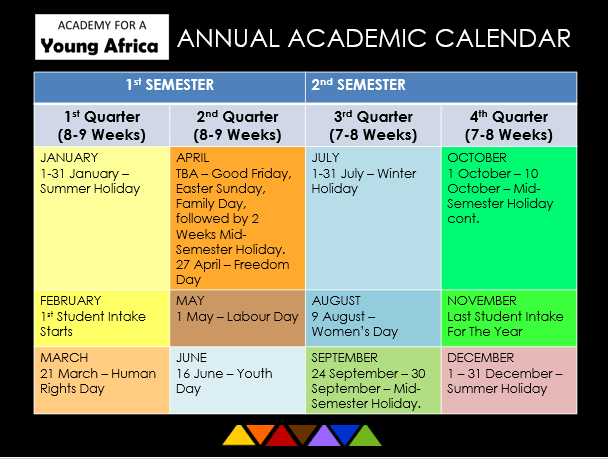
- Each ACADEMIC Year For The LEAP Course Consists Of 2 Semesters (6 Months). Each Semester Is Divided Into 2 Terms (Quarters – 3 Months). Your 1st Semester Starts In The Week When You Start With Your first Study Group Session and Weekly Assignments.
- The ACADEMIC CALENDAR Includes All Normal Public Holidays, Two Weeks Holidays During March/April, Four Weeks Winter Holidays During July/August, Two Weeks Holidays During September/October and Four Weeks Summer Holidays During December/January.
- Each LEAP Module Runs Over Six Months (One Semester)
- You Do Not Have To Complete Any Assignments, Take Part In Study Group Meetings Or Evaluation Or Assessment Sessions During Public Holidays or Academic Holiday Periods.
- Kindly Note That There Will Be No Study Group Sessions, Evaluation or Assessments On Sundays.
- Please Note That This Is A FULL-TIME Skills Training Programme. You Will Be Expected To Focus On Your Studies FULL-TIME While You Are Studying At Home And Completing Your Daily Tasks, 4 Days Per Week, And On 1 Day Per Week You Will Be Attending A Groupwork Session At A Venue In Your Community. You Will Also Be Expected To Take Part In One Community Event Each Quarter On A Saturday.
- If You Are Experiencing A Family or Health-Related Emergency, You May Request A “Study Break”, And Then “Catch-Up” In Future Weeks. This Will Extend Your Study Programme, But NOT Your Bursary. If You Take Too Many Study Breaks, You May Have To Pay For Your Own Studies Every Month, In Order To Complete The LEAP Course And Receive Your Level 1 Certificate Qualification.
- Also Note, That The Practical Assignments Of This Leadership And Entrepreneurship Training Programme Will Teach You HOW TO MAKE MONEY, From The Very First Month Of Taking Part In The LEAP Course. If you follow the instructions, you will be able to start generating an income while you are studying – EARN while you LEARN. So Many Of Your Personal Assignments Each Week Are Aimed At Giving You The Opportunity To Improve Your Skills In Making Money. Your first goal will be to make enough money during the first two months of your LEAP Course to make it possible for you to buy an own smartphone and pay for your own data, so that you can continue your training easily using your cellphone.
4. Financial Contribution
All LEAP Students or their families must be willing to contribute financially to the success of completing the LEAP Course. The ETI Bursary does not provide any stipend for students – it only covers the cost of the course and the administrative expenses related to the student in terms of managing the payroll, UIF and reporting to the company which is paying for the bursary.
These are the items that you or a family member will need to pay for yourself as a LEAP student:
- Your own pen to take notes and complete any written assignments
- One A5 Notebook each month to be used as your “Portfolio of Evidence” (POE) for submission to the Assessor for SETA Accreditation Purposes. These notebooks usually cost between R12.00-R20.00 each.
- You will either need to have an own cellphone OR you may provide the cellphone number of one of the people living in the same house as you, like a family member, so that you can be contacted by cellphone. You may receive sms messages or WhatsApp messages on this phone, and you may also receive a phone call from time to time on this cellphone number. Please make sure to stay in touch with the person whose cellphone number you have provided to us as part of the application and registration process, so that we may reach you. If we cannot reach you, you cannot become a student.
- You will need to either use your own smartphone and data, or a family members’ or friends’ smartphone and data, or visit an Internet Café and pay for access to use one of their computers to create your OWN Gmail email Address.
- Enough own data during Month 1 and Month 2 to read your Gmail emails from the ACADEMY containing your Weekly Personal Assignments, either on your own cellphone, a fellow Student’s cellphone or at and Internet Café, or at the Satellite Campus. The assignments will be practical tasks and written tasks, which you will record in your A5 Notebook (POE).
- Enough transport money to attend your weekly Study Group Session near your home address. Where possible, you will be linked to a Study Group which is within walking distance of your home. You can also offer your home as a venue for the weekly Study Group Session, then you don’t have to walk or travel anywhere, if your fellow students agree.
- Enough transport money to attend your monthly Evaluation Session or quarterly Assessment Exam at a venue near your Satellite Campus.
NOTE: Please don’t worry too much about this money! If you follow the steps we teach you during your first lessons, you will soon make ENOUGH MONEY yourself to pay for everything you need!
LEAP Course Structure
The LEAP Course is a “Learning by Doing” skills training programme. While there is a lot of knowledge shared and students are encouraged to read a lot, the focus of the programme is that each student must LEARN SOMETHING by DOING SOMETHING. In this way, students build a lot of self-confidence and practical skills, that help them to be better at life, prepares them extremely well for future training, and makes each individual student ready to start working or to start making money through an own business.
As a LEAP student, you will learn through 6 different ways of learning:
LEARNING METHOD 1: PERSONAL ASSIGNMENTS
A LEAP Student may register and start studying at any time, except during the ACADEMY For A Young Africa’s Term Holidays. Please look at the Annual Academic Calendar below to see when the ACADEMY For A Young Africa has its Term Holidays. During the Term Holidays, students are ‘on holiday’ from assignments, but the expectation is that even during this time students will be involved in practicing their leadership and entrepreneurship skills, through practical work. These Term Holidays are also necessary to ensure ongoing training of the staff working at the ACADEMY For A Young Africa, or one of the Satellite Campuses of the ACADEMY.
As a LEAP Student you will complete your Personal Assignments at your own pace, week by week. These are the kinds of Personal Assignments that you will need to complete:
- Personal reading and writing assignments. (You will need to get an own pen and notebook each month. This notebook will become your “Portfolio of Evidence” (POE) for the SETA Assessment process. We will help you to access books, newspapers or magazines to read).
- Online reading and responding to quizzes. (You can read on your cellphone or on any computer that has internet, for instance at a Youth Centre or Public Library).
- Action Assignments. (You will be asked to do something, like interviewing a neighbour or shop owner, writing a business plan and doing tasks that can generate an income for you).
LEARNING METHOD 2: GROUPWORK ASSIGNMENTS
The Groupwork Assignments are mainly aimed at developing your leadership skills, interpersonal skills, management skills, coordination skills and also give you an opportunity to learn from your fellow students and share your own experiences with your fellow students. You will be assigned to a LEAP Study Group as close as possible to your home, so that – ideally – you may walk to meet your fellow students in your Study Group on one day each week. LEAP Study Groups may choose to meet on any weekday from Monday to Friday, with the understanding that once a month the Study Group members must ALL travel to a venue arranged by their Satellite Campus
- Groupwork assignments. (Group discussions).
- Groupwork assignments – Practical assignments (You will be asked to organise activities as a team).
- Monthly Evaluations. (You will keep a record of all your assignments in your notebook, hand in this notebook (your Portfolio of Evidence), during an Evaluation Session coordinated by your Satellite Campus (e.g. your Youth Development Centre) and report on your tasks verbally once a month. You will also write one monthly Assessment Paper, either on paper or digitally.
- Quarterly Summative Assessments. (Every Quarter (three months) you will need to complete an exam to provide evidence. This exam will either be on paper or online, under supervision of a SETA qualified Assessor).
NOTE: If you miss a Study Group Session, then you need to take part in a future Study Group Session that offers the same group training during the next year. You have to complete each of the Study Group Sessions in order to gain the points needed to graduate from the LEAP Course. Basically, it means that if you miss one Study Group Session this year, you will complete it next year. Overall, you should not need more time than 12 months to complete the LEAP Course.
BONUS ACTIVITY: In addition, at the end of each Term you will have the opportunity to take part in a Voluntary Student Exchange Programme during your Term Holidays. This Student Exchange Programme is aimed at broadening your mind and moving somewhere else for one month, so that you can get to know a different part of the country.
_______________________
Annual Academic Calendar
LEAP Course Content
The LEAP Course Content is based on the four parts of what makes us a human being:

In order to be successful as human beings, each one of us needs to learn to understand the four parts of what makes us human:
- BODY: If we want to achieve success in life and live a healthy life, we need to understand how our body works, and how we can look after it in the best possible way. This is not just about our own body – this is also about caring for our family, our home and our environment, and appreciating our culture, because all of these are needed to keep us healthy and full of energy, make sure that we have a strong personal identity and can be self-confident in interacting with other people.
- MIND: God has given human beings a mind that can learn and develop itself throughout life. It is our mind that helps us to develop the skills we need to make money, either through working for someone else or by making money ourselves. The LEAP Course will teach you how to develop your mind, express your creativity and understand how to find the knowledge you need to be practical and successful and how to make AND manage your money, so that you can build a financially stable and successful life, to take care of yourself, your family, build your community and contribute to a strong and peaceful society by paying taxes to government. You will also learn to use the digital technology that is critical for success in your career or business in the 21st Century, and to understand the amazing opportunities that this digital economy is creating for you! This part of the LEAP Course will really help you to understand how business works, whether you are planning to work for someone else or make your own money.
- EMOTIONS: Our emotions are very important, because we need to understand how to find happiness and build good relationships with the people around us. We humans cannot survive on our own: we need one another. Also, becoming very good at building relationships is what will make sure that you are more successful in your career, or in your business. If you know how to manage your emotions and how to care for other people, you will move ahead MUCH FASTER in every area of your life. This part of the LEAP Course will teach you excellent communication skills, conflict management skills, coordination and teamwork skills and community building skills.
- SPIRIT: We humans all have a spirit. This is what remains after our body has died. The LEAP Course teaches knowledge about the Spirit, according to the teachings of the Bible. This knowledge is now between 2000-6000 years old and has helped many civilisations to grow strong over the centuries. People who have learnt how to develop a strong spirit can overcome problems that people who have a weak spirit struggle with. LEAP will teach you how to become inspired, motivated and encouraged, so that you can stay focused on achieving your goals in life, and inspire, motivate and encourage others.
_______________________
“We shape our lives through the choices that we make. If we make GOOD choices, we build beautiful lives. If we make BAD choices, we build sad lives. The LEAP Course prepares students to have the knowledge they need in the 21st Century to make GOOD choices, while giving them all the information and encouragement youth needs to be able to build BEAUTIFUL lives, by building loving families, caring communities, successful businesses and a strong and peaceful country. LEAP aims to teach youth across Africa these skills, so that – through our youth – this Continent will become a space of global inspiration!”
Reinhild Niebuhr – Founder, Young Africa VISION
We will give you the knowledge – but YOU are responsible for your success!
___________________________



Get Ready For A Life Of All-Round SUCCESS!
“God did not give us a Spirit of Fear. His Spirit is a source of POWER and LOVE and SELF-DISCIPLINE.”
– 2 Timothy 1:7
Address
Email: youngafrica@econovix.net
Unit 20 Mifa Park, 399 George Road
Midrand, 1682, SOUTH AFRICA
(c) 2021 Young Africa INVESTMENTS (Pty) Ltd
 Young Africa